Listen to Interview with President of THE TECHNION
The Technion-Israel Institute of Technology: A Century of Innovation
June 13, 2012 Banking and Securities Regulatory Compliance
"The Technion-Israel Institute of Technology: A Century of Innovation"
with Samuel Ezerzer and Jack J. Bensimon, Managing Director, Risk Diagnostics
http://www.radio-shalom.ca/mp3/Programs/1042/2012-06-13-technion-institut.mp3listen to the show

MONEY AND BUSINESS
Introduction
The Technion-Israel Institute of Technology, otherwise referred to as "Technion" is one of the world’s leading engineering universities. It is home to over 67,000 graduates, with over 90,000 degrees awarded.
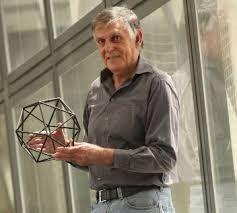
Technion has recently teamed-up with American Cornell University in out-bidding major Ivy-League rivals (including Stanford University) to build a $2B graduate facility in New York by 2017 to house Masters and Ph.D. engineering students. This is part of mayor Bloomberg’s goal in making New York’s give Silicon Valley a run for its money, and making it the leading technology hub of the world. And Technion will play a key role in getting them there.Inventions that began at Technion contain a long and impressive list – to name a few - ICQ (the first instant messaging protocol), the USB key (memory drive), Better Place , and the recent Nobel Prize winner in chemistry, Dr. Dan Schectman, for his pioneering work in quasi-periodic crystals.

Technion was built in 1912, before the creation of the state of Israel. "Learn, then build", was the mainstay of Technion, and to this day, still remains. With us today to discuss the 100th year centennial milestong for Technion is Prof. Boaz Golany, live from Haifa, Israel, and Jack Bensimon, our foreign correspondent in our Toronto studios.

today live from toronto is Jack Bensimon, He is on the chair subcommittee and board member of the Canadian Technion Society, live from Israel is Professor Boaz Golany is the Vice President for External Relations and Resource Development and the incumbent of the Samuel Gorney Chair in Engineering at Technion - Israel Institute of Technology.
My name is Samuel Ezerzer, your host to the Money & Business show on Radio Shalom, CJRS 1650 AM. Thank you for tuning in live on the Money & Business show, with our studio and headquarters in Montreal, the financial capital and the home to the greatest hockey team, the Montreal Canadians. We have another great show for you today and as always, you can call if you have any questions, comments, or criticisms on today's topic. Please call us direct at 514 738 4100 ext 200 or email me at moneyandbusinessshow@gmail.com if you have any inquiries. You can also visit our website at www.radio-shalom.ca – all our shows are archived there.
"The Technion-Israel Institute of Technology: A Century of Innovation"

Jack Bensimon
Our guest today is Jack Bensimon, Managing Director of Risk Diagnostics Inc., an independent securities regulatory compliance consulting firm located in Toronto’s Bay St. core. He has worked in the securities industry for over 18 years, mainly acting as Chief Compliance Officer (CCO) for banks, investment banking and counselling firms, trust companies, and broker-dealers. He has testified as an expert anti-money laundering witness in federal court for a major banking litigation case.
He is a graduate of the University of Toronto, The Wharton School, University of Pennsylvania (Investment Management). Jack has a Master of Laws (LL.M.) in Securities Law and a Master of Laws in the General stream from Osgoode Hall Law School (York University). He is completing another Master of Laws (LL.M.) in Business Law at the University of Toronto, Faculty of Law, on a part-time basis. He is also chair of the subcommittee and board member of the Canadian Technion Society. The Technion-Israel Institute of Technology is based in Haifa, Israel. He can be reached at jbensimon@rogers.com




Jack Bensimon
Our guest today is Jack Bensimon, Managing Director of Risk Diagnostics Inc., an independent securities regulatory compliance consulting firm located in Toronto’s Bay St. core. He has worked in the securities industry for over 18 years, mainly acting as Chief Compliance Officer (CCO) for banks, investment banking and counselling firms, trust companies, and broker-dealers. He has testified as an expert anti-money laundering witness in federal court for a major banking litigation case.
Professor Boaz Golany
Professor Boaz Golany is the Vice President for External Relations and Resource Development and the holder of the Samuel Gorney Chair in Engineering at the Technion - Israel Institute of Technology. He holds a Ph.D. from the School of Business at the University of Texas at Austin (1985). He has been a faculty member in IE&M since 1986, served as an Associate Dean for Teaching 1994-1999 and as the faculty's Dean 2006-2011.
Professor Boaz Golany is the Vice President for External Relations and Resource Development and the holder of the Samuel Gorney Chair in Engineering at the Technion - Israel Institute of Technology. He holds a Ph.D. from the School of Business at the University of Texas at Austin (1985). He has been a faculty member in IE&M since 1986, served as an Associate Dean for Teaching 1994-1999 and as the faculty's Dean 2006-2011.
Professor Golany has served as an Area Editor and member of the Editorial Board for the Journal of Productivity Analysis, IIE Transactions, Omega and Operations Research. Dr. Golany has published over 80 papers in refereed journals and over 15 book chapters. His publications are in the areas of Industrial Engineering, Operations Research and Management Science.
Dr. Golany has served as a consultant to various companies and agencies in Israel and the US spanning various sectors.
Sam
Jack Bensimon, Managing Director of Risk Diagnostics Inc., an independent securities regulatory compliance consulting firm located in Toronto’s live from Israel Professor Boaz Golany is the Vice President for External Relations and Resource Development and the incumbent of the Samuel Gorney Chair in Engineering at Technion - Israel Institute of Technology.
Disclaimer: The suggestions, views, and experiences presented here are in no way, directly or indirectly, to be interpreted as legal or financial advice.
Segment I: The 100-year Evolution of Technion
[jack to boaz] Q1. here we are celebrating the 100th centennial anniversary of technion. it’s been a bumpy ride. what period in technion’s evolution was the biggest challenge?
[jack to boaz] Q2. how did technion overcome those initial bumps along its path?
[jack to boaz] Q3. in looking back at its evolution, what period stands out as its inflection point?
[jack to boaz] Q4. what is the most important lesson technion has learned in the last 100 years?
 Image of Mayor Bloomberg, Technion President Lavie and Cornell President Skorton via NYC Digital
Segment II: The R&D, Technology, and Innovation focus of Technion
[jack to boaz] Q4. what is the most important lesson technion has learned in the last 100 years?

Segment II: The R&D, Technology, and Innovation focus of Technion
[jack to boaz] Q1: technion faculty almost have, what some would describe, a paranoia over R&D and its commercial adoption. what’s driving this culture?
[jackto boaz] Q2. what is unique about the israeli mindset that perpetuates and fosters creativity?
[jack to boaz] Q4: engineering students at technion are encouraged to think outside-the-box and develop start-up companies. how is this done at technion?

[sam to jack] Q4. what role does the CTS in helping technion execute on its initiatives?
Segment IV: Recent Technion Initiatives: Cornell-Technion Strategic Partnership
[sam to boaz] Q1. this past november technion was awarded the bid among various leading ivy-league engineering universities in the us. what is the nature of this strategic partnership and how will it advance the technion cause?
[sam to boaz] Q2. how will this partnership impact its brand and international reach of students ?
[jackto boaz] Q2. what is unique about the israeli mindset that perpetuates and fosters creativity?
[jack to boaz] Q3. what is unique about technion that makes it capable of driving innovation from its students?
[jack to boaz] Q4: engineering students at technion are encouraged to think outside-the-box and develop start-up companies. how is this done at technion?
Segment III: The Impact of Technion on Israel and mankind around the world
[sam to Boaz] Q1. what role does technion play in the economic growth of israel?[sam to boaz] Q2. what are some major tech achievements from technion grads?
[Sam to Boaz] Q3. These programs must require substantial and ongoing funding initiatives. How is funding sustained to maintain the hight quality of its programs, students, faculty, and facilities?
[sam to jack] Q4. what role does the CTS in helping technion execute on its initiatives?
Segment IV: Recent Technion Initiatives: Cornell-Technion Strategic Partnership
[sam to boaz] Q1. this past november technion was awarded the bid among various leading ivy-league engineering universities in the us. what is the nature of this strategic partnership and how will it advance the technion cause?
[sam to boaz] Q2. how will this partnership impact its brand and international reach of students ?
[sam to boaz] Q3. what synergies do you see between cornell university and technion in making new york a major technology hotbed?
[Sam TO Boaz] Q4: WHEN CAN WE EXPECT THIS PROGRAM TO BE ROLLED OUT AND TO WHOM WILL IT CATER TO?
Segment V: Technion’s Future: The next 100 years, and beyond
[sam to Boaz Q1. technion has come along way since its birth in 1912. what are the two most significant initiatives you envision technion achieving?
[sam to boaz] Q3: can you tell us a bit about the launch this month of the book, "technion nation" – what can we take away from it?
[sam to jack] Q3. in strengthening cts, how can canadians contribute to the cause and further advance technion’s contribution to mankind ?

Samuel Ezerzer


